Understanding SEBI's New Closing Auction Session (CAS): Timeline, Straddle Premium Cliff, and Market Impact

On August 3, 2026, the Securities and Exchange Board of India (SEBI) rolled out one of the most significant structural changes to Indian equity markets in recent years: the Closing Auction Session (CAS) for F&O-eligible securities.
If you are an intraday trader, an F&O enthusiast, or a long-term investor, this change fundamentally alters how your trades are executed in the final hour of the market, when your broker squares off your positions, and how closing prices are discovered.
Here is a detailed guide on what the new SEBI CAS rule is, why it was introduced, how it works, and the side effects it is already introducing to the Indian stock market.
1. Why Was CAS Introduced? The Death of the 30-Minute VWAP
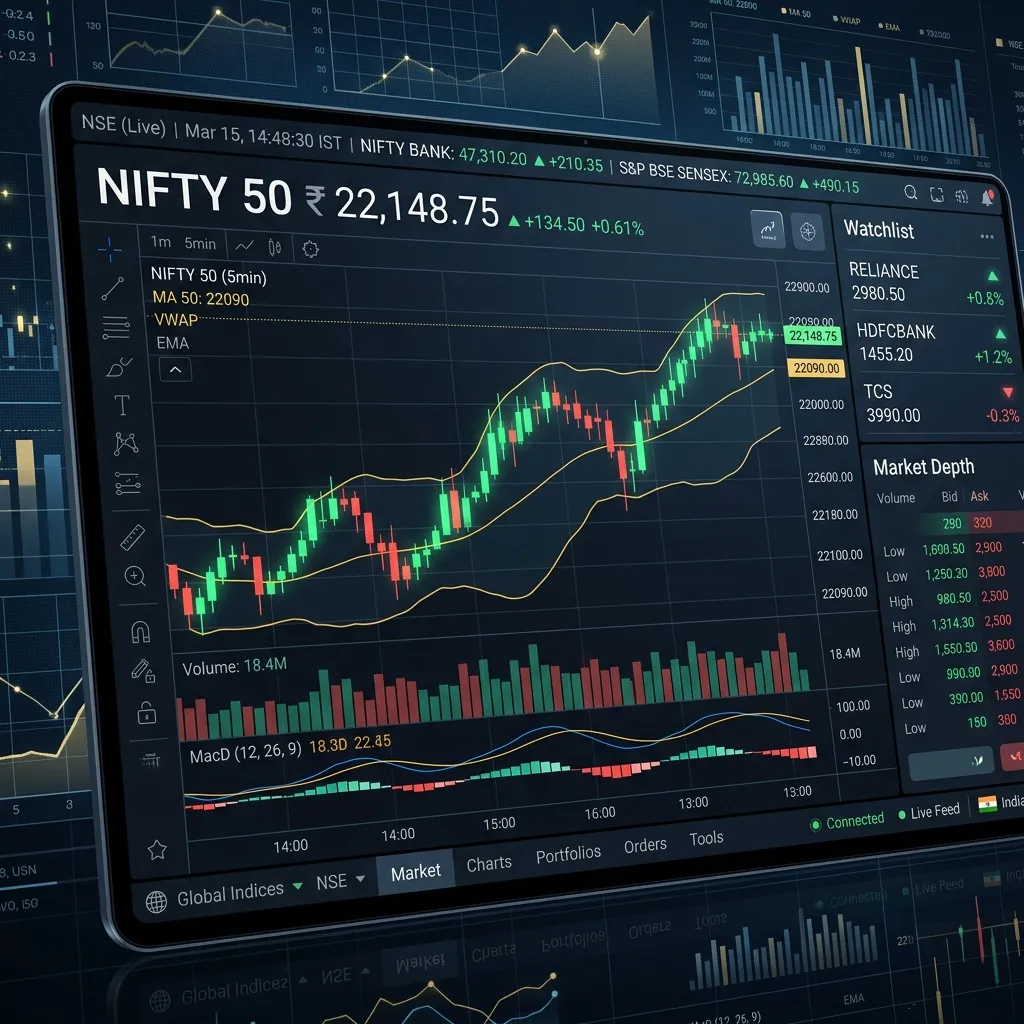
For years, the closing price of a stock on Indian exchanges (NSE and BSE) was determined using the Volume Weighted Average Price (VWAP) of the final 30 minutes of trading (from 3:00 PM to 3:30 PM).
While this system worked for a long time, it suffered from a major vulnerability: price manipulation.
- The VWAP Problem: Because the closing price was a simple average of the last 30 minutes, large market players (institutional desks, algorithmic traders) could execute massive buy or sell blocks in the final few minutes of the day to artificially inflate or deflate a stock’s closing price.
- The Ripple Effect: These last-minute price distortions directly impacted benchmark index calculations (like the Nifty 50 and Sensex), mutual fund Net Asset Values (NAVs), portfolio valuations, and the settlement of derivative contracts.
By transitioning to the Closing Auction Session (CAS), SEBI aims to align India with global best practices (used by the NYSE, NASDAQ, and LSE), where closing prices are determined through a centralized order-matching auction rather than continuous trade averaging.
2. How the Closing Auction Session (CAS) Works
The new rule applies exclusively to equity cash shares that have active Futures & Options (F&O) contracts. Non-F&O stocks continue to trade under the old continuous mechanism until 3:30 PM.
For F&O-eligible stocks, continuous trading now stops abruptly at 3:15 PM. The market then enters the 20-minute CAS window.
The 20-Minute CAS Timeline (3:15 PM – 3:35 PM)
| Time Window | Phase | What Happens? |
|---|---|---|
| 3:15 PM – 3:20 PM | Transition & Reference Price | The continuous trading session closes. The system calculates a reference price (which is the VWAP of trades between 3:00 PM and 3:15 PM). A price band of ±3% around this reference price is set for the auction. |
| 3:20 PM – 3:25 PM | Order Entry (Open) | Traders can enter, modify, or cancel both Limit and Market orders. No orders are matched or executed during this time; they are simply pooled in the order book. |
| 3:25 PM – 3:30 PM | Order Entry (Limit-Only & Random Cutoff) | Only Limit orders can be entered, modified, or canceled. Market orders are blocked. During the last 2 minutes (between 3:28 PM and 3:30 PM), the system executes a random closure to prevent order spoofing and front-running. |
| 3:30 PM – 3:35 PM | Order Matching & Settlement | The system runs a matching algorithm to determine the single equilibrium price—the price at which the maximum quantity of shares can be traded. All matching orders are executed at this single price, which becomes the official closing price. |
The F&O Extended Window (3:35 PM – 3:40 PM)
Because the official cash market closing price for F&O stocks is now finalized only at 3:35 PM, derivative traders need time to react to these closing prices. As a result, SEBI has extended the trading hours for the Equity Derivatives (F&O) segment by 10 minutes, allowing F&O trading to continue until 3:40 PM.
3. Immediate Effects on the Market
Just days after implementation, the market is already adjusting to the new regime. Here are the core impacts observed:
A. Improved and Fairer Price Discovery
Because all orders are pooled together, the final price represents the true intersection of aggregate supply and demand at the day’s end. Price manipulation has become significantly harder because attempting to skew a pooled auction requires vastly more capital than skewing a thin continuous market in the last seconds of the trading session.
B. Short-Term Volatility & Index Divergences
In the initial sessions following the August 3 launch, traders reported instances of sharp price swings and unexpected closing levels. In some cases, the Nifty 50 and BSE Sensex experienced minor closing discrepancies. Analysts attribute this to liquidity gaps during the auction. Because the mechanism is brand-new, many retail and institutional participants are still sitting on the sidelines during the 3:20 PM – 3:30 PM window, resulting in thin order books that can cause wider price gaps when matched.
4. The Side Effects: What Traders and Brokers Must Watch Out For
While the CAS is structurally healthier for the market long-term, it has introduced several immediate “side effects” and operational challenges:
A. Earlier Intraday (MIS) Auto-Square Off Timings
This is the most critical change for retail intraday traders. Previously, brokers squared off intraday MIS/CO/BO positions around 3:15 PM to 3:20 PM.
- The New Reality: Because continuous trading for F&O-eligible cash stocks now stops at 3:15 PM, brokers have had to aggressively pull forward their auto-square-off times.
- The Timeline: For CAS-eligible stocks, most brokers are now triggering auto-square-offs between 3:05 PM and 3:10 PM.
- The Fragmentation: This has created a dual-track square-off system. While F&O-eligible cash positions are auto-liquidated by 3:05 PM, non-CAS stocks and F&O derivatives positions continue to have auto-square-offs between 3:20 PM and 3:25 PM. Intraday traders must keep a close eye on their clocks to avoid unexpected broker liquidations and charges.
B. Algorithmic Trading Re-writes
Quantitative and algorithmic trading desks have had to rewrite their end-of-day execution models. Algorithms that were previously optimized to accumulate or exit positions gradually during the final 30-minute VWAP window must now transition to placing auction-specific orders during the CAS, adapting to the 3% price bands and random order-matching cutoffs.
C. Retail Confusion Over “Unexecuted” Orders
Many retail investors placing orders between 3:20 PM and 3:30 PM are confused when their trades do not execute instantly. In the CAS window, orders are only matched and completed in a single batch at 3:30 PM. Any unmatched orders are either carried forward to the post-close session or canceled, which requires a learning curve for retail investors accustomed to instantaneous confirmation.
D. The Option Expiry Phenomenon: Straddle Premiums Refusing to Decay (Then Crashing at 15:28)
For option sellers and intraday expiry-day traders, the CAS has introduced a bizarre new premium behavior.
- The Gamma Risk Stand-Off: On expiry days, out-of-the-money (OTM) option premiums usually decay smoothly to zero as the clock ticks toward 3:30 PM. However, during the CAS window (3:15 PM – 3:30 PM), continuous trading in the cash segment is paused while the auction operates. Because the final cash settlement price is unknown until the auction matching occurs, option writers are exposed to massive tail-risk. If the equilibrium price shifts unexpectedly, an option can swing from worthless to highly valuable.
- No Decay Until the Lock: To protect themselves, market makers and option sellers refuse to lower their quotes. Consequently, straddle premiums remain artificially high and refuse to decay in Rupees (₹) between 3:15 PM and 3:28 PM.
- The 15:28 Collapse: The CAS features a random order-book closure between 3:28 PM and 3:30 PM. The moment the system triggers this random close and the final equilibrium price becomes highly predictable or locked in, the uncertainty instantly evaporates. Straddle premiums that held strong for 15 minutes suddenly crash to zero (or their exact intrinsic value) around 15:28 PM. This sudden cliff-drop creates massive volatility spikes, slippage, and unexpected stop-loss hits for option buyers and sellers alike.
Conclusion: A Step in the Right Direction, Despite the Growing Pains
SEBI’s introduction of the Closing Auction Session (CAS) is a mature, structural reform that brings Indian markets in line with international standards. By replacing the manipulable 30-minute VWAP with an equilibrium-based auction, it guarantees fairer closing prices for mutual funds, indices, and retail investors.
However, the side effects—such as compressed intraday trading hours (earlier auto-square-offs), initial auction price volatility due to liquidity gaps, and a fragmented closing schedule for F&O and non-F&O stocks—will take time for the market to fully digest.
Traders’ Checklist for the CAS Era:
- Check your broker’s updated auto-square-off times (typically 3:05 PM for F&O cash stocks).
- If trading F&O, remember that you have until 3:40 PM to adjust your options and futures positions based on the 3:35 PM cash closing price.
- Be cautious when placing large market orders in the 3:20 PM – 3:25 PM window, as thin auction order books can lead to higher-than-expected slippage.
Serious about upgrading your execution?
Don't let manual errors eat your profits. Join the professional traders using Cloud Trader Pro.
Get Professional Access