The Rise of Decoupled Algorithmic Trading: Speed, Stability, and the Cloud

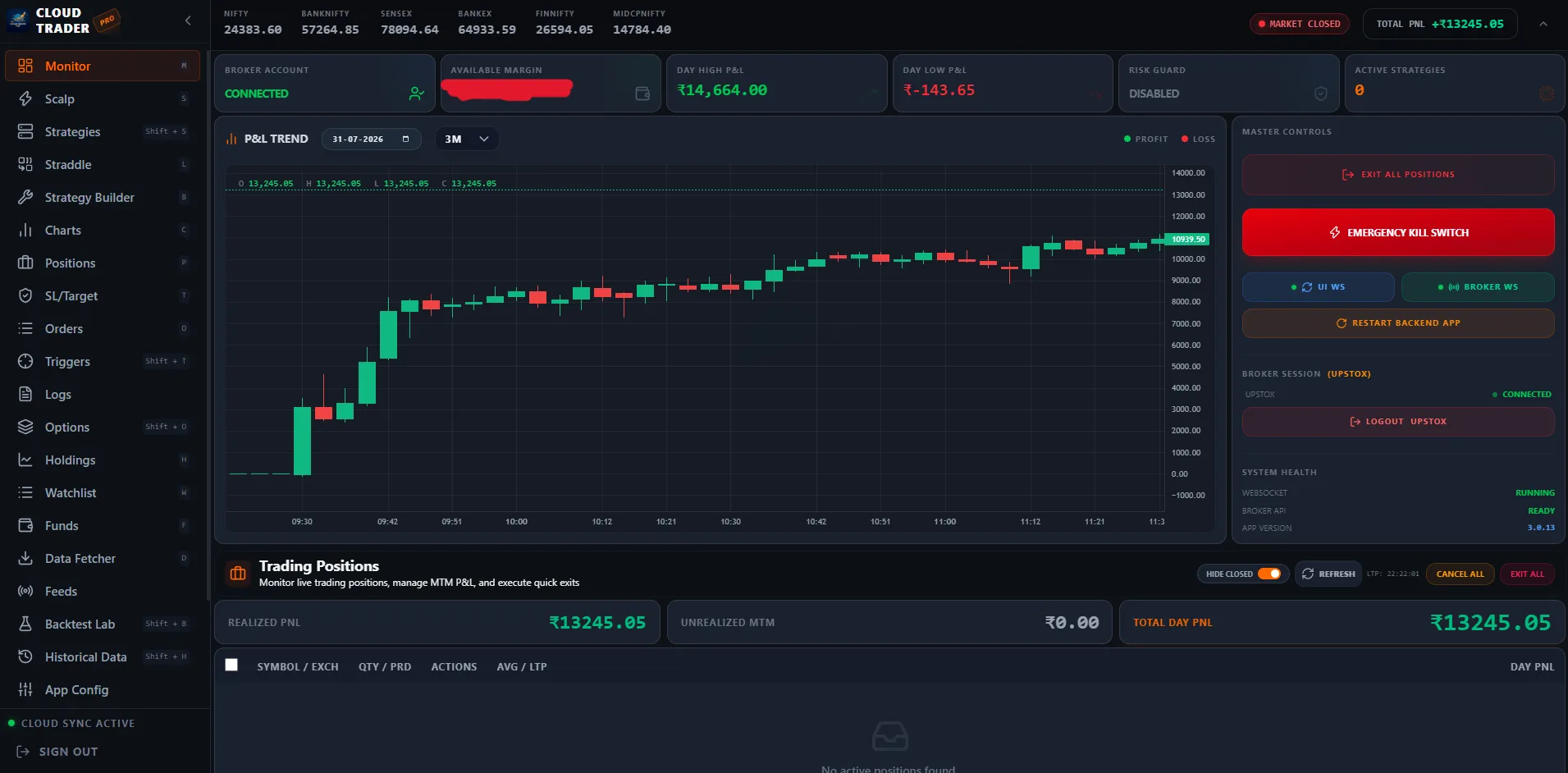
The Core Challenge of Modern Retail Algorithmic Trading
For years, retail algorithmic traders in India have faced a common bottleneck: local execution latency and browser instability.
Typically, trading scripts run on a local computer or within a browser tab. If your internet connection drops for a few seconds, if your computer goes to sleep, or if a heavy browser tab freezes the main Javascript thread, your execution fails. In high-speed option scalping or straddle trading, a delay of even 500 milliseconds can mean the difference between a profitable trade and a slippage loss.
To solve this, professional developers have moved toward a decoupled, server-side architecture.
What is a Decoupled Algorithmic Trading Architecture?
In a decoupled trading system, the User Interface (UI) and the Execution Engine are completely split:
-
The Server-Side Engine:
- Runs 24/7 on high-performance cloud servers.
- Autonomously subscribes to WebSocket market data feeds.
- Computes real-time index calculation loops and strategy signals.
- Monitors safety rules (like max loss limits or Trailing Stop Loss) and tracks order statuses.
-
The Web Dashboard:
- A lightweight frontend running on your web browser or mobile phone.
- Communicates with the server to show you what is happening and lets you send commands (like start/stop strategy, adjust lot size, or manual square-off).
Because the server handles the actual work, it doesn’t matter if your laptop battery dies, if you close your browser window, or if you lose internet connection on your phone. The server keeps trading, monitoring, and executing with sub-millisecond precision.
Leveraging Flattrade, Upstox, and Shoonya APIs for Peak Performance
Modern platforms like Cloud Trader Pro utilize the robust API environments of leading Indian brokers like Flattrade, Upstox, and Shoonya:
- Flattrade: Known for its zero-brokerage models, it provides a stable API platform for high-frequency strategies where transaction costs can otherwise erode profits.
- Upstox: Offers institutional-grade websocket feeds and high rate limits, making it ideal for multi-leg option strategies, basket orders, and real-time portfolio tracking.
- Shoonya: Supported by Finvasia, it provides a completely fee-free (zero brokerage, clearing, and API charges) interface, making it perfect for active option scalpers and high-volume traders looking to maximize execution margins.
By coupling server-side calculations with these high-performance APIs, retail traders can execute complex strategies—such as automated straddles, trend-following VWAP, and scalping panels—without the typical overhead of institutional infrastructure.
Conclusion: The Institutional Edge in Your Browser
Algorithmic trading is no longer about hosting heavy desktop software or leaving your browser running all day. By adopting a decoupled, cloud-based platform like Cloud Trader Pro, you ensure that your execution speed is prioritized, your logic runs autonomously, and your risk limits are monitored round-the-clock.
Ready to experience zero-installation, high-speed algorithmic trading? Explore our platform and choose a plan that fits your trading goals.
Serious about upgrading your execution?
Don't let manual errors eat your profits. Join the professional traders using Cloud Trader Pro.
Get Professional Access